Why Customer Retention and Reactivation Are Essential for Sustainable Business Growth
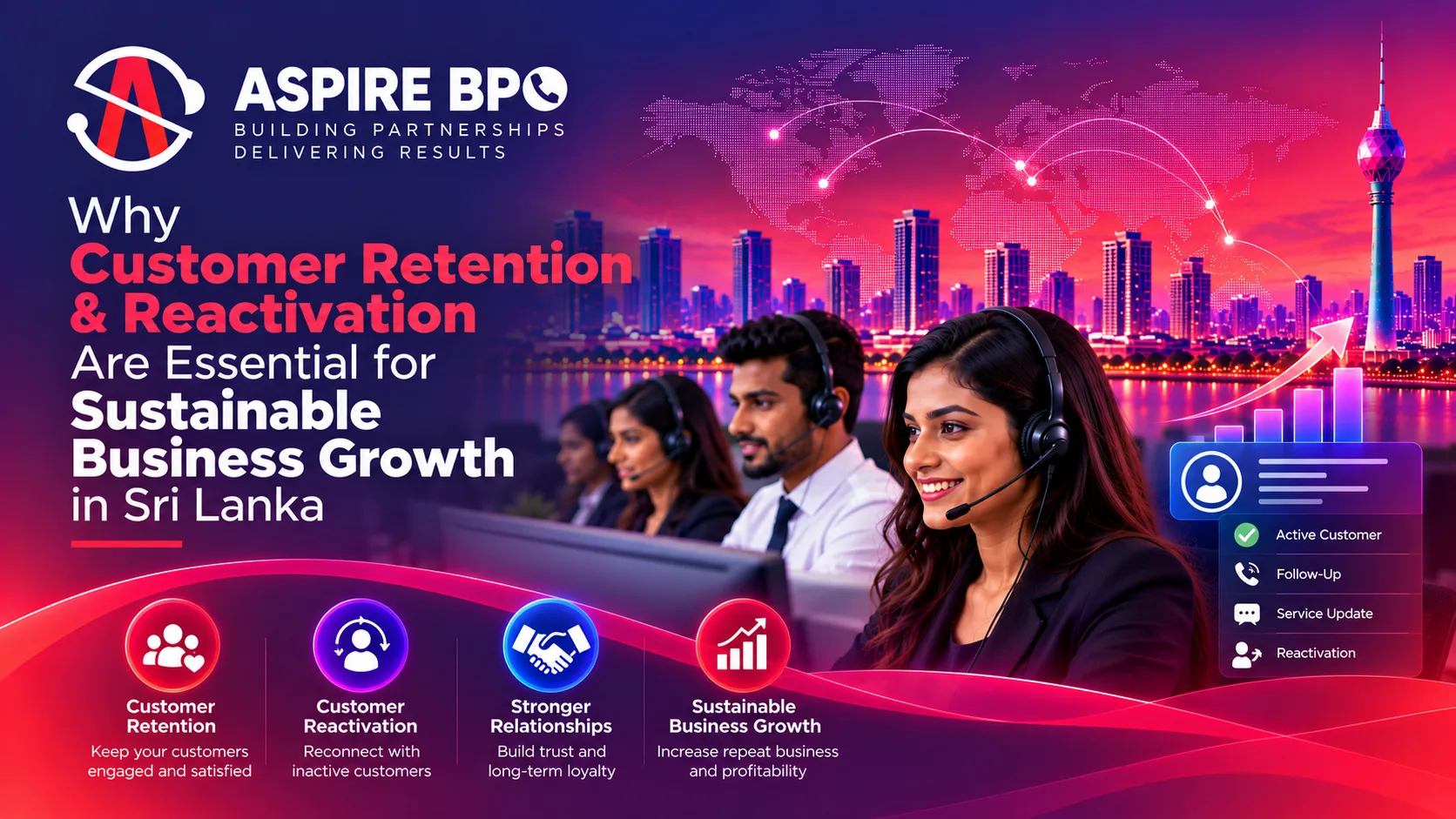
Acquiring new customers is an important part of business growth, but maintaining strong relationships with existing customers is equally essential for long-term success.
Businesses invest significant resources in advertising, marketing campaigns, lead generation, and sales activities to attract new customers. However, when existing customers become inactive, stop purchasing, or disengage from a brand, valuable business opportunities may be lost.
This is why customer retention and reactivation services have become important components of modern business strategies.
By maintaining regular customer engagement, understanding customer requirements, and reconnecting with inactive customers, organizations can strengthen relationships and identify opportunities for sustainable growth.
For businesses in Sri Lanka, professional customer retention and reactivation outsourcing can provide dedicated resources for managing follow-ups, customer communication, and relationship-building activities.
At Aspire BPO (Pvt) Ltd, we help organizations manage customer retention, reactivation, and outbound communication through structured outsourcing solutions tailored to their operational requirements.
What Is Customer Retention?
Customer retention refers to the strategies and activities businesses use to maintain relationships with existing customers and encourage continued engagement.
Rather than focusing exclusively on acquiring new customers, retention activities aim to strengthen customer satisfaction, build trust, and support repeat business.
Effective customer retention involves understanding customer expectations, maintaining professional communication, and addressing concerns that may affect the customer relationship.
Common Customer Retention Activities
- Customer satisfaction follow-ups
- Post-purchase communication
- Service feedback collection
- Customer relationship management
- Complaint follow-up coordination
- Appointment and service reminders
- Customer engagement campaigns
- Approved loyalty and promotional communication
Customer retention is not simply about encouraging additional purchases. It is about creating positive customer experiences that support lasting business relationships.
What Is Customer Reactivation?
Customer reactivation involves reconnecting with customers who have become inactive or have stopped engaging with a business.
These customers may have previously purchased products, used services, registered an account, or expressed interest but have not interacted with the organization recently.
A customer reactivation campaign aims to understand why engagement has declined and determine whether the customer has an interest in reconnecting with the business.
Common Customer Reactivation Activities
Inactive Customer Follow-Ups
Contacting customers who have not engaged with the business during a defined period.
Customer Feedback Collection
Understanding why customers stopped using a product or service.
Service Updates
Providing relevant information about new services, improvements, or changes that may interest previous customers.
Approved Promotional Campaigns
Communicating appropriate offers or incentives to eligible customers who have consented to receive marketing communication.
Relationship Rebuilding
Re-establishing communication and addressing concerns that may have contributed to customer inactivity.
Customer reactivation should always respect customer preferences, privacy requirements, and applicable marketing regulations.
Customer Retention vs Customer Reactivation: What's the Difference?
Although customer retention and reactivation are closely related, they focus on different stages of the customer relationship.
| FeatureCustomer RetentionCustomer Reactivation | ||
| Target Audience | Existing active customers | Inactive or disengaged customers |
| Primary Objective | Maintain relationships | Re-establish engagement |
| Communication Approach | Ongoing follow-ups and support | Targeted reconnection campaigns |
| Common Activities | Feedback, reminders, customer care | Win-back calls, service updates, surveys |
| Main Outcome | Continued customer engagement | Renewed customer interest or activity |
Both approaches can support business growth when implemented through professional and customer-focused communication.
1. Strengthen Long-Term Customer Relationships
Successful businesses recognize the importance of maintaining strong relationships with their customers.
Regular communication allows organizations to understand customer expectations, identify service concerns, and demonstrate continued interest in customer satisfaction.
Customer retention activities can include post-service follow-ups, satisfaction surveys, and assistance with unresolved enquiries.
When customers feel valued and supported, they may be more willing to maintain an ongoing relationship with the business.
Professional communication is therefore an important part of building customer trust.
2. Reduce Dependence on New Customer Acquisition
Attracting new customers often requires investment in advertising, marketing, sales activities, and promotional campaigns.
Although new customer acquisition remains important, businesses should also evaluate opportunities within their existing customer base.
Maintaining relationships with current customers can help organizations generate repeat business and reduce unnecessary dependence on continuous acquisition campaigns.
The financial value of retention varies by industry, customer behavior, service quality, and operating costs.
A balanced growth strategy should consider both new customer acquisition and existing customer engagement.
3. Identify Opportunities for Repeat Business
Existing customers may require additional products, services, or assistance as their needs change.
Regular follow-up communication can help businesses understand these requirements and identify relevant opportunities.
For example, a customer who previously purchased a service may require renewal assistance, an additional booking, or information about a related offering.
A structured customer retention process can help organizations maintain appropriate communication without relying on customers to initiate every interaction.
All sales-related communication should remain accurate, relevant, and respectful of customer preferences.
4. Reconnect with Inactive Customers
Customers may become inactive for many reasons.
Some may no longer require a particular service, while others may have experienced communication difficulties, changes in circumstances, or dissatisfaction.
A professional reactivation campaign can help businesses understand these reasons.
Rather than immediately focusing on selling, representatives should first establish whether the customer is interested in further communication.
Relevant feedback can help businesses improve services and identify opportunities to rebuild relationships.
Not every inactive customer will return, but understanding the reasons for inactivity can provide useful business insights.
5. Improve Customer Satisfaction Through Regular Follow-Ups
Customer satisfaction does not end when a sale or service interaction is completed.
Post-purchase communication provides an opportunity to understand the customer experience and identify any outstanding concerns.
Follow-up activities may include confirming service completion, requesting feedback, and coordinating assistance when required.
A dedicated customer retention team can help businesses maintain consistent follow-up procedures.
This approach can support better customer communication and improve visibility into service-related issues.
6. Support Customer Loyalty and Brand Confidence
Customer loyalty develops through consistent experiences, dependable service, and trust.
Businesses that communicate professionally and respond appropriately to customer concerns can create stronger relationships.
Retention campaigns can support these objectives by maintaining contact with existing customers and ensuring important follow-up activities are not overlooked.
However, customer loyalty cannot be achieved through frequent calling alone.
Communication must provide genuine value and respect the customer's time, preferences, and interests.
7. Improve Customer Feedback and Business Insights
Customer retention and reactivation campaigns can provide valuable information about customer behavior.
Through structured communication, businesses may identify:
- Common reasons for customer inactivity
- Customer satisfaction concerns
- Service improvement opportunities
- Changing customer requirements
- Interest in new products or services
- Common communication difficulties
Organized feedback reporting allows management to evaluate patterns and identify areas requiring attention.
These insights can support better customer experience strategies and operational decisions.
8. Increase Operational Efficiency Through Outsourcing
Managing customer retention campaigns internally requires dedicated resources.
Businesses must organize customer databases, prepare communication guidelines, assign employees, monitor follow-ups, and evaluate campaign performance.
As customer volumes increase, these activities can become time-consuming.
Outsourcing selected retention and reactivation functions can help businesses establish structured communication operations without directly managing every administrative responsibility.
A professional BPO provider can assist with campaign execution, customer interaction recording, and agreed reporting procedures.
This allows internal teams to focus on strategic customer relationship decisions and other core responsibilities.
9. Support Multilingual Customer Engagement
Communication in a customer's preferred language can help improve understanding and accessibility.
In Sri Lanka, businesses may serve customers who prefer Sinhala, Tamil, or English.
Multilingual retention and reactivation campaigns can help organizations communicate more effectively with diverse customer groups.
Aspire BPO provides customer communication capabilities in Sinhala, Tamil, and English, supporting businesses with different language requirements.
Professional communication should also consider cultural expectations, customer preferences, and appropriate calling practices.
10. Build a More Sustainable Business Growth Strategy
Sustainable business growth requires more than short-term sales activity.
Organizations benefit from understanding customer relationships across different stages, including acquisition, engagement, retention, and reactivation.
A structured retention strategy can help businesses identify customers requiring additional attention and maintain consistent communication.
Reactivation campaigns can complement this approach by creating opportunities to reconnect with inactive customers.
Together, these activities can support a more balanced customer relationship management strategy.
Which Industries Can Benefit from Customer Retention and Reactivation?
Customer retention and reactivation services can support businesses across different industries.
Retail and E-Commerce
Businesses can use customer follow-ups, satisfaction surveys, and approved re-engagement campaigns to maintain relationships with previous customers.
Healthcare Administration
Healthcare service providers may benefit from appointment reminders, administrative follow-ups, and patient feedback collection, subject to appropriate confidentiality and consent procedures.
Education and Training
Educational institutions can use follow-up communication to engage previous enquiries, coordinate course information, and maintain contact with interested learners.
Transportation and Logistics
Transport and logistics businesses can benefit from customer feedback collection, service follow-ups, and relationship management activities.
Hospitality and Travel
Hospitality businesses may use customer satisfaction surveys and appropriate re-engagement communication to maintain relationships with previous guests.
Professional and Business Services
Service providers can use retention campaigns to coordinate renewals, gather feedback, and maintain communication with existing clients.
The most appropriate approach depends on the organization's business model, customer preferences, and applicable regulations.
How to Build an Effective Customer Retention Strategy
An effective retention strategy begins with understanding the customer base.
Businesses should identify customer segments, review engagement patterns, and determine which communication activities are appropriate.
Step 1: Organize Customer Information
Maintain accurate customer records and relevant interaction histories.
Customer information should be collected, stored, and used in accordance with applicable privacy and data protection requirements.
Step 2: Identify Customer Segments
Customers may be grouped according to relevant business criteria, such as recent activity, service history, or previous engagement.
Step 3: Define Campaign Objectives
Establish clear goals for each campaign, such as collecting feedback, improving follow-up completion, or reconnecting with inactive customers.
Step 4: Develop Professional Communication Guidelines
Prepare appropriate scripts, approved information, escalation procedures, and customer preference handling instructions.
Step 5: Conduct Structured Follow-Ups
Assign resources to manage customer communication according to agreed schedules and procedures.
Step 6: Monitor Campaign Performance
Review operational indicators, customer feedback, and campaign outcomes.
Step 7: Improve the Process
Use reporting and feedback to identify opportunities for better customer engagement.
Key Performance Indicators for Customer Retention and Reactivation
Businesses should measure retention and reactivation activities using clearly defined performance indicators.
Customer Retention Rate: The percentage of existing customers retained during a defined period.
Customer Churn Rate: The percentage of customers lost during a defined period.
Reactivation Rate: The proportion of eligible inactive customers who resume a defined activity after a campaign.
Contact Rate: The percentage of outreach attempts resulting in successful customer contact.
Follow-Up Completion Rate: The proportion of planned customer follow-ups completed.
Repeat Purchase Rate: The proportion of customers making additional purchases during a defined period.
Customer Satisfaction Score: Feedback collected regarding customer experiences.
These indicators should be interpreted according to the organization's industry, customer lifecycle, and campaign objectives.
How Aspire BPO Supports Customer Retention and Reactivation in Sri Lanka
Established in 2015, Aspire BPO (Pvt) Ltd is a Sri Lankan business process outsourcing company providing customer communication, telesales, and business support services.
Our customer retention and reactivation solutions are designed to help businesses maintain structured communication with existing and inactive customers.
Our Services Include
Customer Retention Calls
Maintaining appropriate communication with existing customers to support engagement and customer satisfaction.
Inactive Customer Reactivation
Conducting structured outreach to reconnect with inactive customers and understand their current requirements.
Customer Follow-Up Campaigns
Managing scheduled customer communication and recording relevant outcomes.
Customer Feedback Surveys
Collecting customer opinions and identifying potential service improvement opportunities.
Outbound Customer Communication
Supporting approved outbound campaigns through dedicated calling resources.
Customer Enquiry Management
Handling customer questions and coordinating relevant follow-ups.
Multichannel Customer Support
Assisting businesses with communication through voice, email, live chat, and WhatsApp.
Why Choose Aspire BPO for Customer Retention Outsourcing?
At Aspire BPO, we believe that successful customer relationships are built through consistent communication, professionalism, and trust.
Our outsourcing approach focuses on understanding each client's requirements and developing practical operational solutions.
Our Key Strengths
Personalized Client Partnerships
We work to understand client objectives and establish suitable outsourcing arrangements.
Direct Management Involvement
Our approach emphasizes management accessibility, communication, and operational accountability.
Multilingual Customer Support
We provide communication capabilities in Sinhala, Tamil, and English.
Flexible Outsourcing Models
Our arrangements include dedicated agents, small teams, and project-based support.
Structured Customer Follow-Ups
We emphasize organized communication, accurate records, and agreed reporting procedures.
Employee Training and Development
We recognize the importance of employee knowledge, professionalism, and service quality.
Long-Term Business Relationships
Our objective is to support dependable client partnerships through transparent communication and operational flexibility.
Frequently Asked Questions
What is customer retention?
Customer retention refers to the activities businesses use to maintain relationships with existing customers and encourage continued engagement.
What is customer reactivation?
Customer reactivation involves reconnecting with inactive or disengaged customers to understand their requirements and identify opportunities for renewed engagement.
Why is customer retention important?
Customer retention can support repeat business, stronger customer relationships, improved feedback collection, and more sustainable business growth.
Can customer retention and reactivation be outsourced?
Yes. Businesses can outsource selected customer follow-up, feedback collection, retention calling, and reactivation activities to a professional service provider.
How is customer reactivation success measured?
Reactivation success may be measured using contact rates, customer response rates, renewed engagement, repeat purchases, and other campaign-specific indicators.
Does Aspire BPO provide customer retention services in Sri Lanka?
Yes. Aspire BPO provides customer retention, reactivation, outbound calling, customer follow-up, and related communication support services.
Conclusion
Customer retention and reactivation are important components of a sustainable business growth strategy.
While attracting new customers remains essential, maintaining relationships with existing customers and reconnecting with inactive customers can create additional opportunities for engagement and long-term value.
Professional retention and reactivation campaigns require structured communication, accurate customer information, appropriate follow-up procedures, and effective performance monitoring.
At Aspire BPO (Pvt) Ltd, we help businesses manage customer retention and reactivation through flexible outsourcing solutions tailored to their operational requirements.
Our goal is to support stronger customer relationships while helping organizations focus on their core business priorities.
Looking for Professional Customer Retention and Reactivation Services in Sri Lanka?
Whether your business needs customer follow-up campaigns, inactive customer reactivation, feedback surveys, or outbound customer engagement, Aspire BPO is ready to discuss your requirements.
Partner with Aspire BPO and strengthen customer relationships through professional retention and reactivation solutions.
Website: https://aspirebpo.lk
Aspire BPO (Pvt) Ltd — Building Partnerships. Delivering Results. Growing Together.