From Enquiry to Opportunity: How Outbound Follow-Ups Help Sri Lankan Businesses Convert Leads
Generating enquiries is only the beginning. Discover how structured outbound follow-ups help Sri Lankan businesses understand customer needs, qualify prospects and move interested leads towards a clear next step.
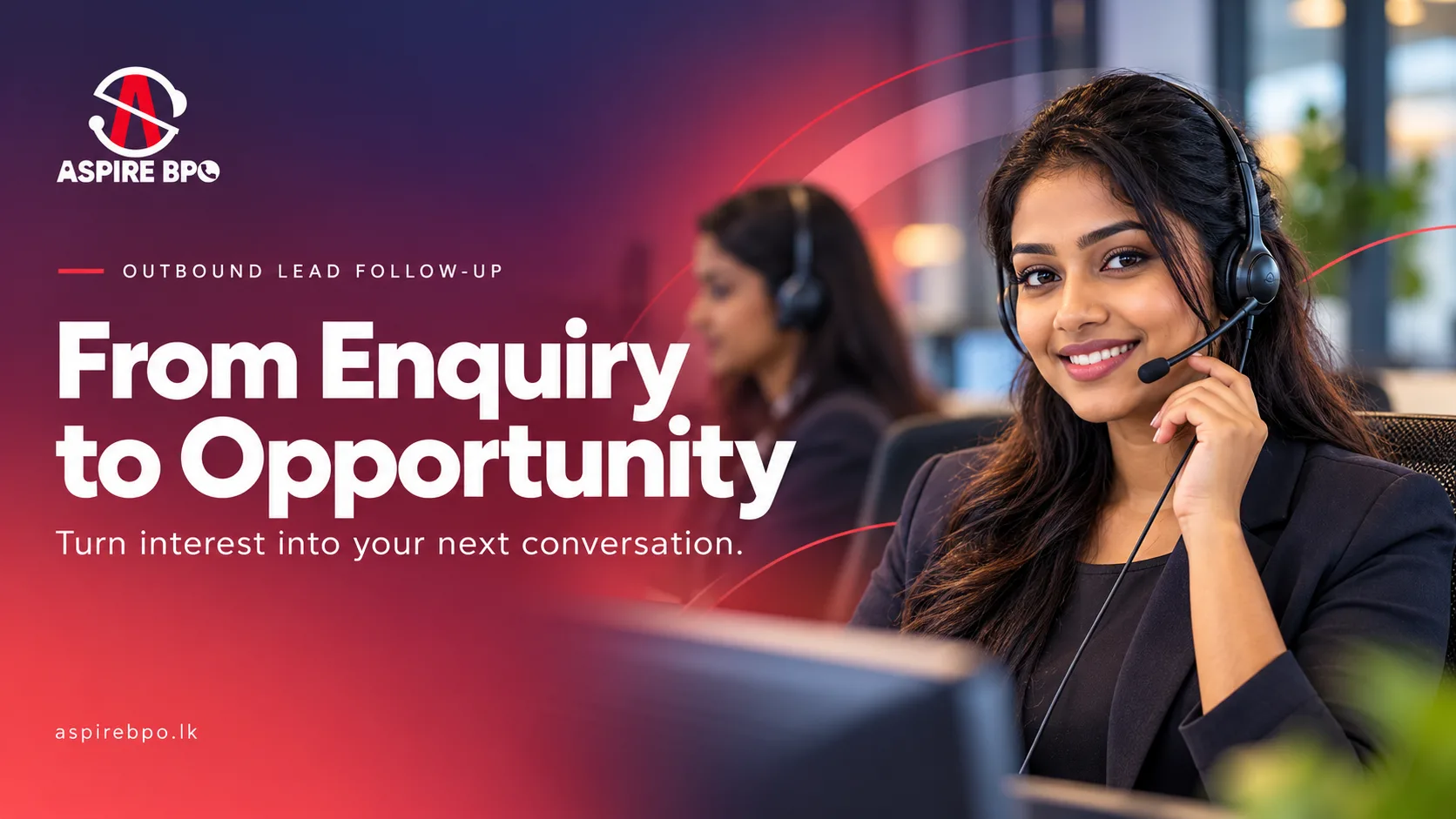
Your next customer may already have enquired.
They may have completed a website form, responded to an advertisement or requested a quotation. But an enquiry does not automatically become a sale. Someone needs to start the conversation, understand the requirement and keep the next step moving.
For businesses investing in marketing, this is an important part of the sales process. Generating interest creates an opportunity. Following up gives your business a chance to develop it.
A structured outbound lead follow-up process helps connect those two stages.
What Is Outbound Lead Follow-Up?
Outbound lead follow-up means proactively contacting someone who has already shown interest in your business.
Unlike an introductory call to a new prospect, this conversation has a starting point: an enquiry, a requested callback, a quotation or an earlier discussion.
The purpose is to understand what the customer needs and agree on a relevant next step. That could be a consultation, product demonstration, appointment, quotation or further conversation with your sales team.
Why Advertising Enquiries Need a Clear Follow-Up Process
Imagine a prospective customer enquires about your service through an online advertisement. Your team sends a brochure, but nobody checks whether the service meets their requirements.
The customer may still have questions about pricing, availability or how to get started. Without a follow-up, your business has little visibility into what happened next.
A defined process helps your team distinguish between:
- Customers who are ready for a sales discussion.
- Interested prospects who need more information.
- Enquiries that do not match your offering.
- People who prefer to be contacted later.
- Contacts who do not want further communication.
This makes the enquiry list more useful and gives your sales team clearer priorities.
Five Steps to More Effective Lead Follow-Ups
1. Give Each Enquiry an Owner
Every new enquiry should have someone responsible for taking action.
Record when it arrived, where it came from and what the person requested. Set a practical response target during your agreed operating hours, and make sure enquiries received outside those hours enter the next follow-up queue.
The goal is a dependable process that your team can maintain.
2. Start With the Customer’s Request
A relevant opening is more useful than a general sales pitch.
For example:
“Hello, you recently enquired about our delivery service. I’m calling to understand your requirements and help with the next step. Is this a convenient time?”
Explain who you are, why you are calling and how the conversation relates to their enquiry. Ask about their needs before recommending an option.
3. Agree on What Makes a Qualified Lead
An enquiry and a qualified sales opportunity are different stages.
Before starting a campaign, decide what your sales team needs to know. Depending on your business, this might include the required service, location, expected quantity, purchasing timeline or decision-maker.
Clear criteria help callers gather useful information and avoid passing incomplete enquiries to the sales team.
4. End With a Specific Next Step
“Please contact us if you are interested” leaves the conversation open-ended.
A clearer outcome might be:
- An appointment at an agreed time.
- A quotation sent to a confirmed email address.
- A demonstration booked with the relevant person.
- A callback on a date requested by the customer.
Record who will take the next action and when it should happen. Respect requests to stop further contact.
5. Track Outcomes, Not Just Call Numbers
Call activity shows how much work took place. Outcomes show what that work produced.
Useful measures include enquiries received, successful contacts, qualified leads, appointments booked, appointments attended and confirmed sales.
Define each measure consistently. For example, an appointment booking should be tracked separately from an attended meeting or a completed sale.
When Should a Business Consider Outsourcing Follow-Ups?
Outsourced support may be useful when enquiries arrive regularly but your internal team struggles to manage callbacks, qualification and appointment coordination alongside its other responsibilities.
Before starting, agree on the enquiry sources, approved scripts, required languages, contact permissions, reporting and handover process.
Begin with a manageable scope and review the quality of conversations as well as the results. Sales outcomes also depend on the offer, pricing, lead quality and the customer’s purchasing decision.
How Aspire BPO Can Support Your Sales Process
Aspire BPO provides telesales and telemarketing services in Sri Lanka, including interested prospect follow-ups and sales appointment setting.
Our lead generation and qualification services also support enquiry follow-ups, prospect assessment and the handover of relevant opportunities to your sales team.
We work with your approved information and agreed processes to help your business manage customer conversations with a clear purpose.
Your marketing starts the conversation. Give every enquiry a clear next step.
Contact Aspire BPO to discuss your lead follow-up and telesales requirements.